



Word Count: 1,750 words | Reading Time: 8-10 minutes
Most of detoxes fail by February. Here’s why, and the simple daily habit that sticks instead.
The January Detox Trap: Why Most Fail Before Valentine’s Day
You start with the best intentions. January 1st arrives, and you’re committed. No sugar. No processed food. All green juices. Intermittent fasting. Detox tea. Maybe even a 30-day cleanse. The plan is perfect. The motivation is sky-high.
By February 14th, most people have quit.
Not because they’re weak. Not because they lack discipline. But because detox culture is built on a lie: that your body needs to be punished to be clean. That restriction is the path to health. That one big reset is better than small, sustainable habits.
Your body doesn’t need a detox. It needs one small daily habit that actually sticks.
Why Detoxes Fail: The Science Behind the Dropout Rate
Let’s start with what actually happens to your body during a detox.
The Detox Industry’s False Promise
The detox market is worth billions. Cleanses, juices, supplements, wraps, teas—they all promise one thing: to flush your system. To reset. To erase the damage of eating normally. But here’s the uncomfortable truth that the detox industry doesn’t want you to know.
Your body is already equipped with a detox system. It’s called your liver and kidneys. They work 24/7 to filter, process, and eliminate waste. They don’t need a juice cleanse. They don’t need activated charcoal. They don’t need you to starve yourself for 7 days.
What they need is consistent support. Not a shock. Not a reset. Just steady, daily help.

The Willpower Collapse: Why Day 21 Is The Danger Zone
When you start a detox, your brain gets a dopamine hit from the commitment. You’re doing something big. Something bold. Something that will finally fix everything. This motivation is real but it’s not sustainable. Willpower is like a muscle—it gets tired.
- Days 1-7: You’re motivated. The newness is exciting. Restriction feels like control, and control feels good.
- Days 8-14: The motivation starts to fade, but you still feel strong. You’ve made it two weeks. You’re committed.
- Days 15-21: This is where detoxes die. The motivation has worn off. Your brain is craving the foods you’ve eliminated. Your body is missing the calories and nutrients. Eating salad for lunch isn’t “clean eating” anymore—it’s deprivation.
By day 21, most people hit a wall. They either break spectacularly (pizza, cake, ice cream in one sitting) or they quietly give up, telling themselves they’ll restart next Monday.

The Deprivation Rebound: The Physics of Restriction
There’s a law in human behavior: restriction creates rebound. Every time you tell yourself “I can’t have X,” your brain becomes obsessed with X. You’ve probably experienced this. You cut out sugar, and suddenly you’re thinking about donuts all day. You do a juice cleanse, and you fantasize about your favorite meal. This isn’t weakness—it’s neuroscience.
When you finally break (and you will), the rebound is often worse than your baseline. You don’t just eat normally again. You overcorrect. You eat everything you’ve been denying yourself, often at once. By early February, you’ve given up on the detox and you’ve eaten more junk than you would have if you’d never started the detox in the first place.
The Real Problem: You Don’t Have A Detox Problem
You have a daily habit problem.
Most people don’t need a 30-day cleanse. They need one simple daily habit that supports their body’s natural detox system. They need consistency. They need something they can stick to, not something they can white-knuckle for 30 days and then abandon.
What Actually Works: The Daily Greens Habit
Here’s what we’ve learned from working with thousands of families: the simplest, most sustainable “reset” isn’t a detox. It’s adding one daily green habit.
- Not eliminating foods. Adding something.
- Not starving. Nourishing.
- Not extreme restriction. Gentle support.
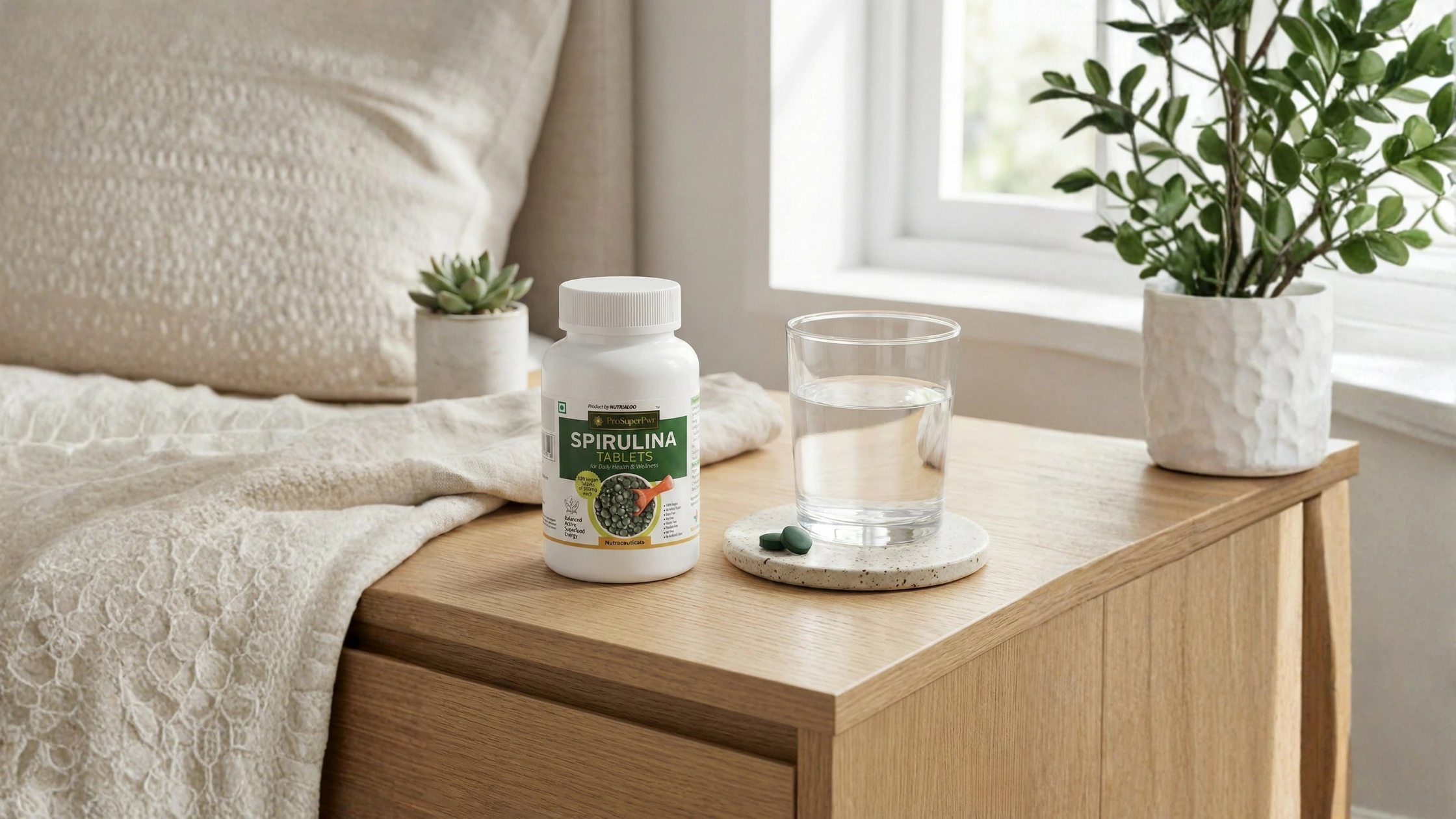
A daily greens tablet or powder—spirulina, nutrient-dense green blends—works because it supports your existing detox system and healthy inflammatory response. It doesn’t require willpower. It takes 30 seconds. One tablet with breakfast. One powder stirred into water. No meal prep. No hunger. No deprivation.
People stay consistent with daily greens because there’s no restriction. There’s no guilt. It’s just a small, easy addition to your routine that works alongside normal eating.
Real Stories: Families Who Ditched Detoxes For One Habit
Case Study 1: Priya – From Juice Cleanse Junkie to Sustainable Habit
Priya, 38, mother of two, spent January doing a 21-day juice cleanse. By day 15, she was exhausted. The next January, she started a simple habit: one spirulina tablet every morning with breakfast. No restriction.
By February, she noticed her energy was more stable. She didn’t have the 3 PM crash. By March, a habit had formed. It wasn’t “transformational.” It was just… sustainable.
“I was exhausted by cleanses. This is just part of my morning. I don’t even think about it anymore.”
Case Study 2: Arjun – The Party Season Reset
Arjun, 42, loves to eat. December was heavy. This year, instead of a detox, he added a daily greens habit in January. One ProSuperPwr spirulina tablet with his morning chai.
By mid-January, his digestion had improved. Not dramatic. Just… better. More regular. Less bloated. He didn’t restrict anything. He ate normally. He just added one habit.
“I’ve never stuck to a health habit for this long. And I’m not even trying hard. It’s just… easy.”
Case Study 3: Deepti & Family – Sustainable Family Habit
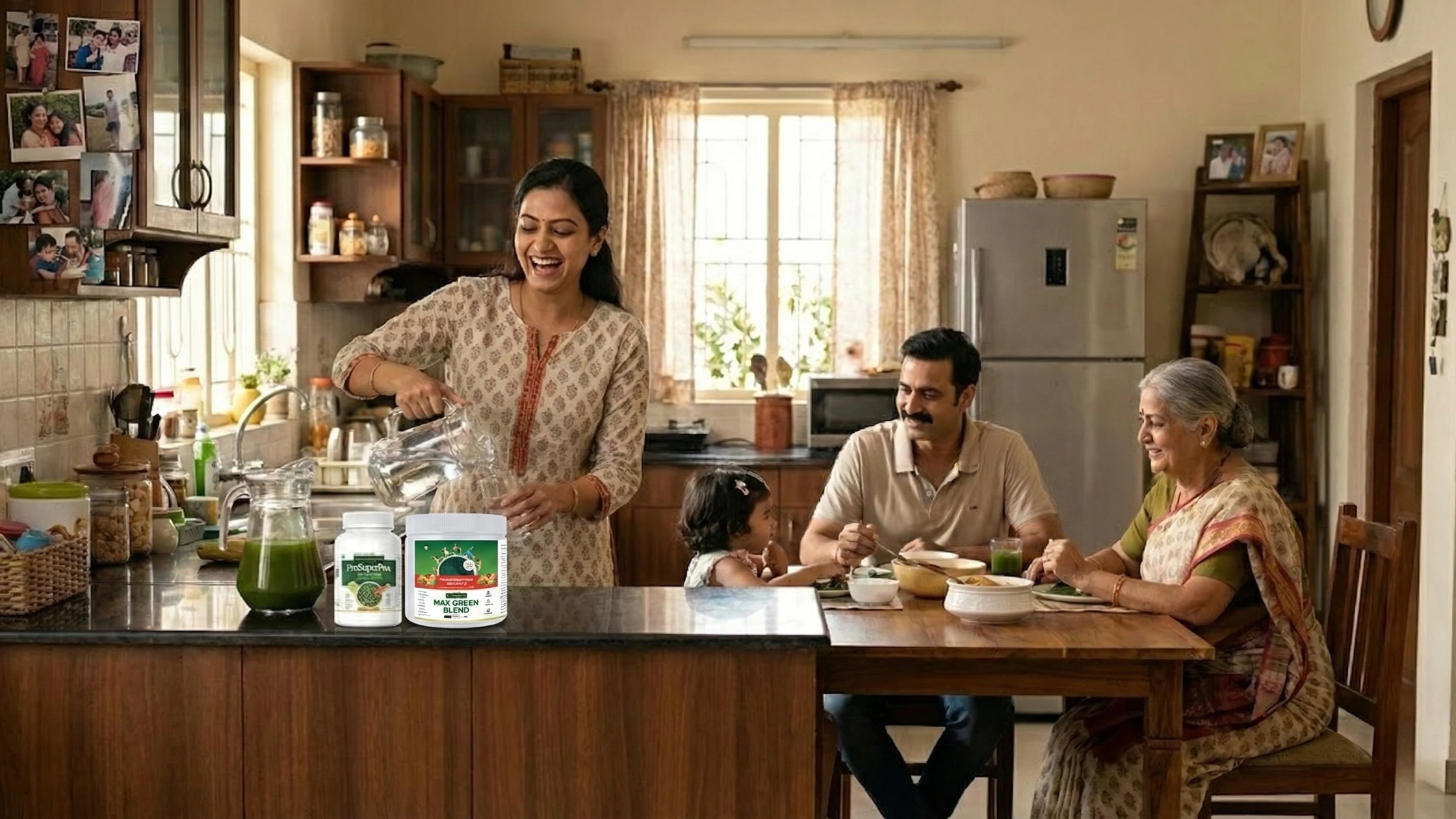
Deepti, 45, and her family struggled with radical meal changes. This year, she introduced the ProSuperPwr Family Combo—spirulina tablets for adults, Boostgreens for the kids.
By February, something shifted. The kids weren’t fighting the habit. It was easy. It took 30 seconds. Parents felt less guilty about letting kids have treats occasionally because at least they were getting daily greens.
“I stopped trying to be perfect and started trying to be consistent. This actually stuck. My kids take their Boostgreens without arguing. That’s the real win.”
The One Habit Framework: How To Make It Actually Stick
If you want to transform how you feel in 2026—not through detoxes, but through one sustainable habit—here’s the framework that works:
Step 1: Pick Your Product (Not Your Cleanse)
Instead of picking a 21-day juice cleanse, pick one daily greens product you’ll actually use. Match the product to your actual life, not your ideal life.
Step 2: Anchor It To An Existing Habit
Don’t create a new time in your day. Attach it to something you already do every single day: breakfast, morning chai, or lunch.
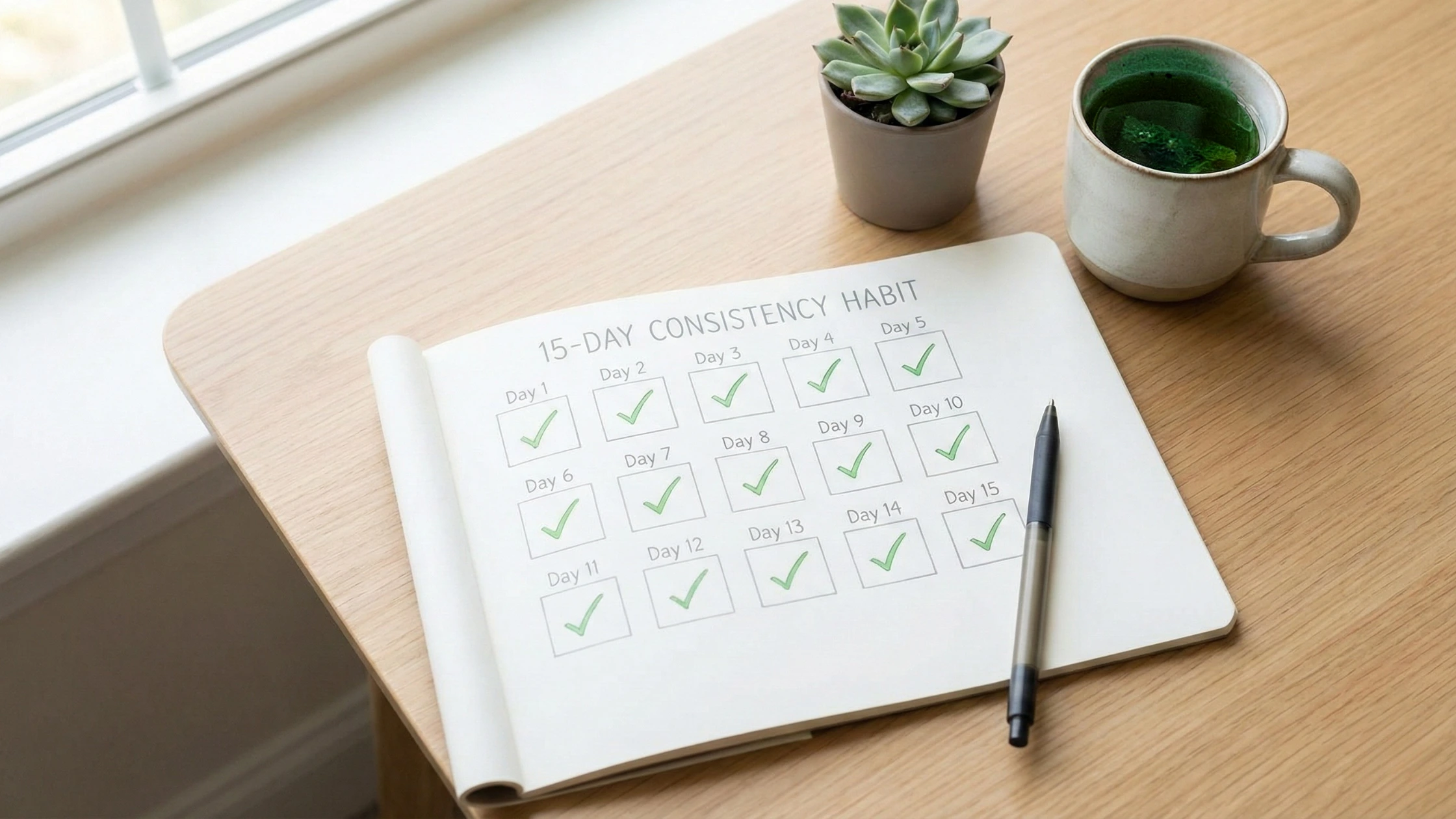
Step 3: Commit For 15 Days, Not 30 Days
Forget 30-day challenges. Start with 15 days. Aim for consistency, not perfection.
Step 4: Track What You Notice, Not What You Lose
Don’t measure this in pounds or inches. Measure it in how you feel. Is your digestion more regular? Are you less bloated? Are you sleeping better? These are the metrics that matter.
What Actually Changes: The 15-Day Experience
If you commit to a daily greens habit for 15 days, here’s what most people experience:
- Days 1-3: Nothing dramatic. You’re just taking a tablet. Mentally, it’s a win because you’re doing something consistent.
- Days 4-7: You might notice your digestion is a bit more regular. Energy is stable. Nothing crazy, just a subtle improvement.
- Days 8-12: By now, if you’re paying attention, you notice something: you’re not as bloated. Your 3 PM energy crash is less severe.
- Days 13-15: The habit is starting to stick. You don’t have to remind yourself anymore. It’s becoming automatic.

The January Decision: Detox Or Habit?
This January, you have a choice.
You can spend January doing another detox. You know how this ends: February 14th, you’re most likely to have quit. You’ll feel guilty. You’ll blame yourself.
Or you can do something different. You can start one small daily habit that actually sticks.
One habit that will still be part of your life in March. In June. In December. Because it’s easy. Because it works. Because you’re not fighting willpower. You’re just supporting your health.
Ready To Start?
Join the movement away from punishment and towards support.
Ready to commit to your health?
Note: This content is for general wellness education only and is not medical advice.